Hello all,
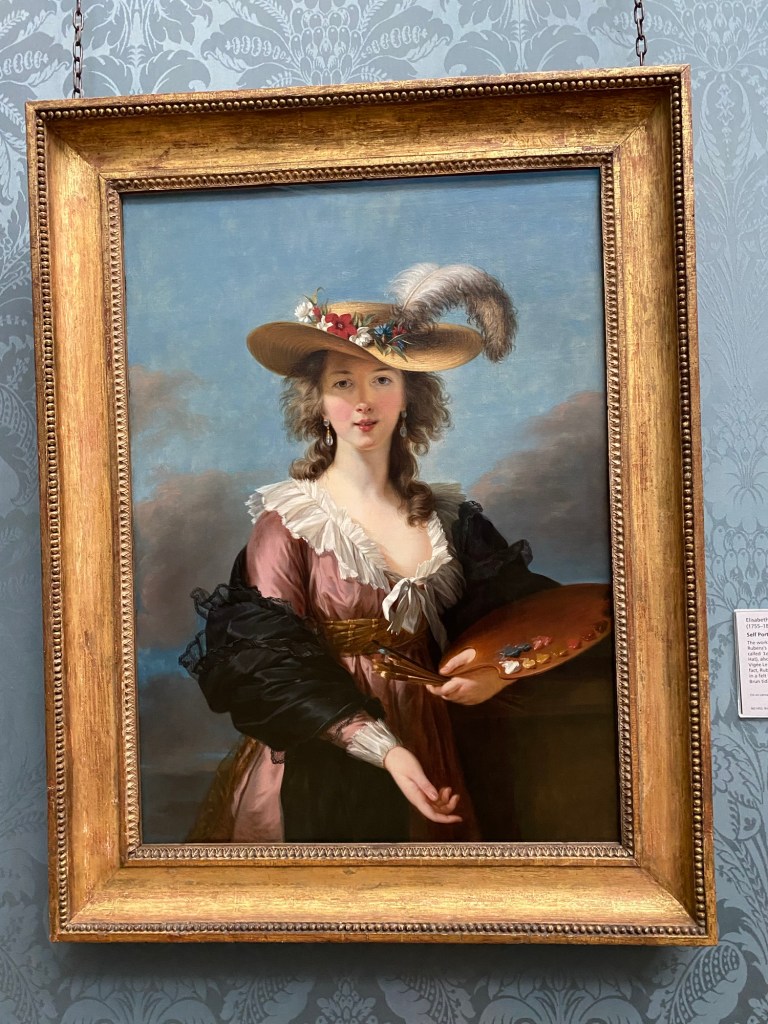
I’m very happy to present my new poem, which I came up with during a visit to the National Gallery. I should say that this is a work of fiction and not based on any real events. I know nothing of the artist, Elisabeth Louise Vigee Le Brun except for seeing her self-portrait and knowing she had to be the main character in this tale of a shipwreck. Anyway, here’s the poem, and see below for some of the pictures that inspired it.
The Shipwreck of Elisabeth Le Brun – a ballad
Crashing, crashing, the waves kept on,
No break or turn of tide,
Lying prone on weathered stone,
Elisabeth had died.
The sun it shone the day before,
Within the sheltered bay,
Juan and Daniel gathered traps,
And some they cast away.
Feet cooled by the lapping waves,
The gentle feel of foam,
The two beneath their wide-brimmed hats,
The coastline they did comb.
Noon, as they left to take some rest,
They waved to a lady there,
Painting the ship that lay offshore,
Wind whipping at her hair.
Elisabeth smiled and greeted them,
Her easel raised up high,
Then to her work she was tempted back,
And a steel returned to her eye.
For the vessel she painted was all for her,
And would set sail that night,
To Helsinki it would carry her,
The place of eternal light.
Colours rushed from mind to brush,
And to her canvas plain,
And through the afternoon she worked,
Until the light did wane.
As that Sun dipped ‘neath the main royal yard,
The artist’s time was done,
Packing away the hues and brushes,
Her mission was begun,
The hill she climbed as the sun it fell,
Weighed down by all her things,
But powerful and light of foot,
That such adventure brings.
The cliff-top house was empty,
And that she well expected,
For father would stay in the town below,
‘til the taverns him ejected.
She left her work upon her bed,
Where he would next day see,
Rage and moan and curse her name,
But know that she was free.
All the times that wore her down,
Were finally to end,
One last look round the house and then,
Her gaze away did bend.
Away from the town and the temple below,
Away from all she knew,
Beyond the ship, the waves and spray,
To where she could be new.
Then down through streets she hurried,
To the ship and climbed aboard,
The smell of tar and rigging,
Her heart, her spirit soared.
The Captain was an antique pillar,
As weathered as his ship,
With some disdain for passengers,
Not different for this trip.
But he in need of money,
Had entered this arrangement,
To carry her across the sea,
Away from her engagement.
‘Tis true, for father in his debt,
To elders of the town,
Had promised poor Elisabeth,
And in a wedding gown.
The magistrate’s son, so mean of heart,
No patron of the arts was he,
But beneficiary of this bargain,
And husband soon would be,
Elisabeth to her stateroom hied,
Waiting for the sounds,
Of casting off and making way,
Across the fishing grounds.
As time wore on, there was no sign,
Of putting out to sea,
Just groans and angry mumblings,
From up and down the quay.
The topgallant sail, full torn and loose,
Was holding them at bay,
As darkness fell, her mind did swell,
The fears would not away.
And through the night they preyed on her,
As at the dock she looked,
Worries, doubts and nightmares full,
A helpless fish she was hooked.
As the sun returned and streamed around her,
She awoke still in her chair,
To calls of making way abound,
Into a sea so fair.
Then, just as the vessel quit the bay,
And strode into open seas,
A mighty thunderhead sprang up,
And on their stern did seize.
As if the angered father,
And fiancé they did scheme,
To call forth mighty Poseidon’s wrath,
Her chariot to unseam.
The spray whipped up like frigid steam,
The wild wind tore around,
And Charybdis opened forth her maw,
To the bottom they were bound.
Upon the deck, Elisabeth,
Clung on to wood and rope,
Saw blue skies through the angry broil,
And in her there was hope.
As the vessel plunged beneath the waves,
A surge came washing through,
Carried her away beyond the masts,
And the calling of the crew.
Wind and tide and Scylla’s wrath,
The helpless waters rent,
Whales into a duck pond,
And nowhere close to spent.
Bent on meeting the clouds aloft,
The waves they reached so high,
And brought down fair Elisabeth,
Atop a rock to lie,
Crashing, crashing, the waves kept on,
No break or turn of tide,
Lying prone on weathered stone,
Elisabeth had died.
But then, a thing mysterious,
The storm spent; to Sun gave way,
And all around Elisabeth,
To steam was turned the spray.
There upon the rock she lay,
Ethereal mist about her,
Her dress and hair a tangled mess,
Spat out from the deep like Jonah.
The sun it warmed her body,
The clouds they were no more,
Calm returned to the battered sea,
Which lapped upon the shore.
Juan and Daniel appeared just then,
From sheltering in the caves,
The broil had taken all their traps,
Their bounty to the waves.
As they kicked and cursed their luck,
Their gaze on her did fall,
There helpless lay Elisabeth,
A victim of the squall.
They ran to her and shook her,
And it seemed that all were blessed,
When a cough rang out from deep within,
And a movement stirred her chest.
Hearing their names she in alarm,
Did give a frightful yell,
They had asked her for hers and she confused,
Did shout forth, Danielle.
But this in turn did save her,
The utterance on waking,
The storm had wrecked her ship,
And now life was for the taking.
No angry father following,
For he would think her drowned,
No jilted bridegroom in pursuit,
To none she would be bound.
The fishermen, her saviours,
They sheltered her and cared,
‘Til ready she was to start again,
With all in time prepared.
And so as Danielle she left,
To seek the midnight sun,
New brushes and new colours bought,
And all the past was done.
Elisabeth, she died that day,
And how the town did mourn,
Except two kindly fishermen,
Who helped her leave reborn.
Well, thanks for making it all the way to the end. It means a lot. Let me know what you think in the comments section. As I said, the inspiration for this came from four pictures in the National Gallery…
Firstly, these two views by Claude-Joseph Vernet, from around 1773.
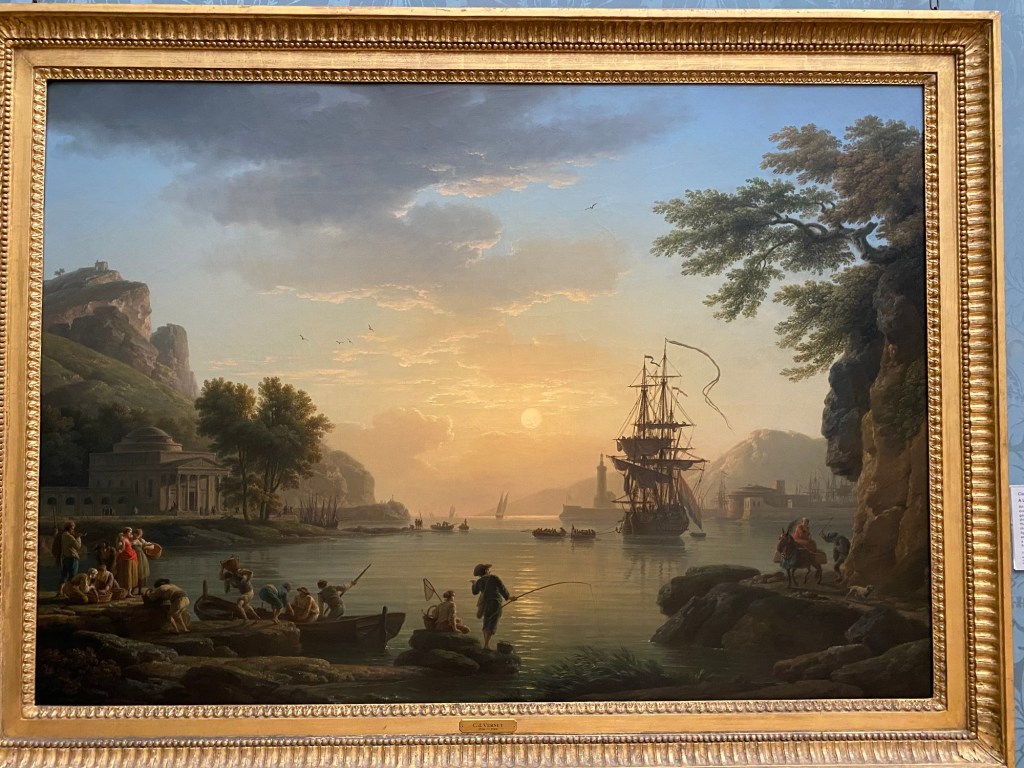
I imagine here the sunset and the ship that Elisabeth paints before heading up to her house.
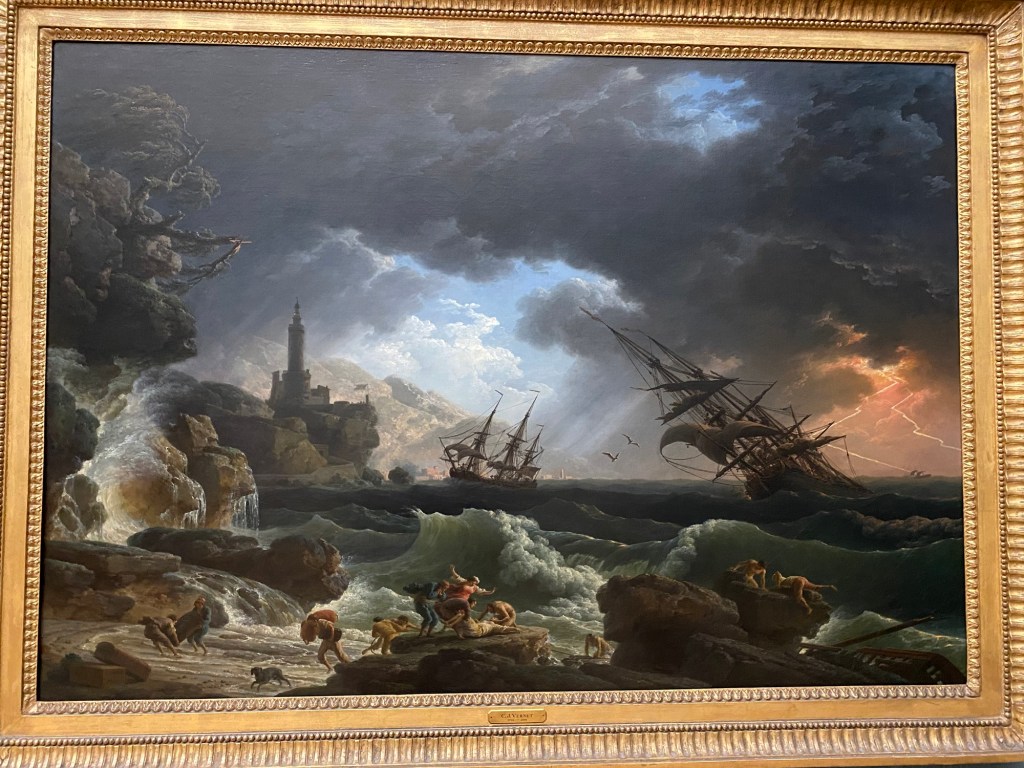
And here the shipwreck and the storm that springs from nowhere. You can see Elisabeth and her saviours in the foreground.
Next, I found my heroine, Elisabeth, in this self-portrait from 1782.
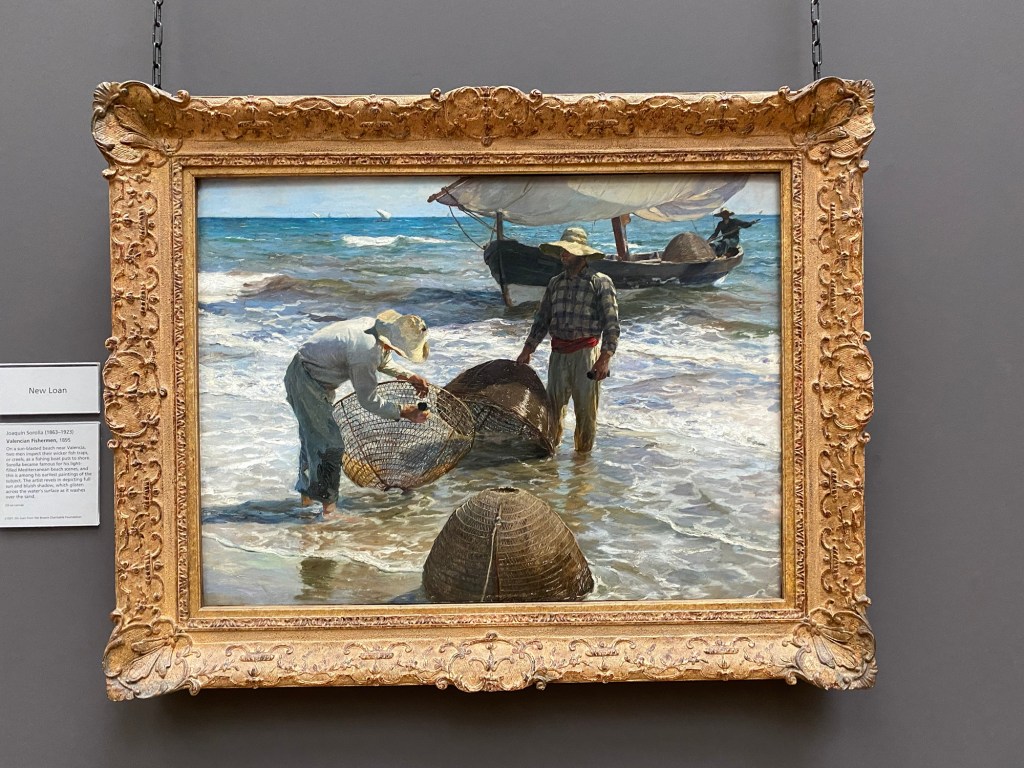
Last but not least, I saw her two saviours, Juan and Daniel. I was especially drawn to this as it reminded me of our trip to Valencia last summer. It is by Joaquin Sorolla and is entitled, Valencian Fishermen.
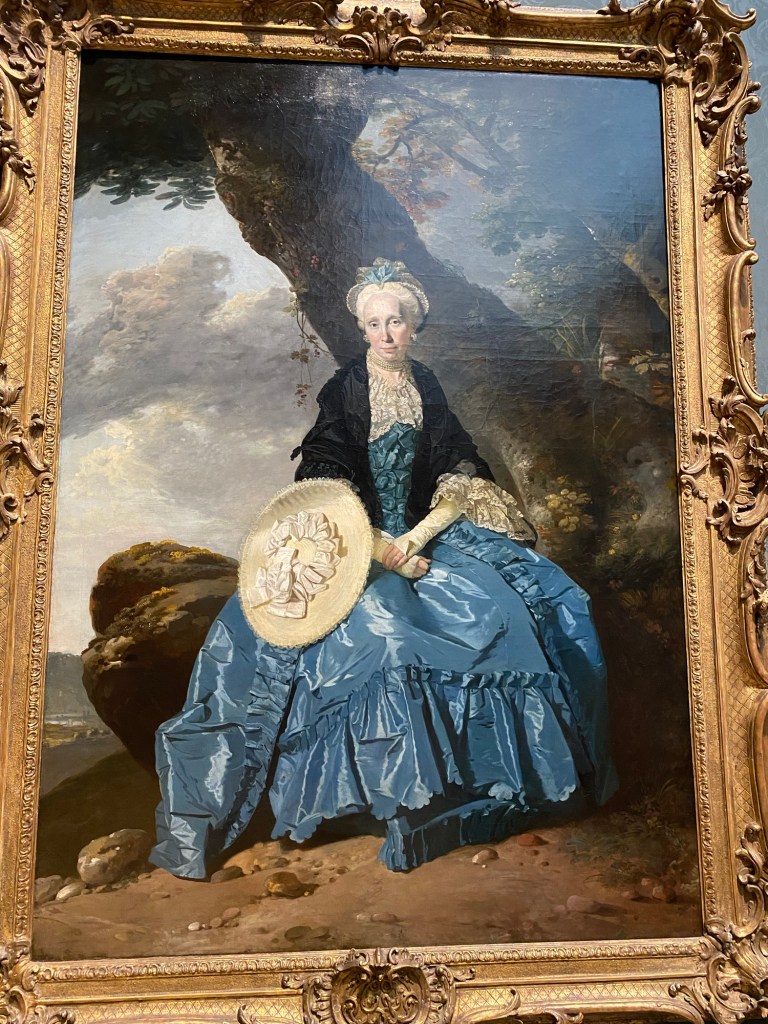
On an unrelated note, I did enjoy this picture too, if only because I couldn’t get Captain America out of my head. She can do this all day!
Thanks for reading,
Richard

