Thought I’d take a break from writing to put this together; a list I’ve been tinkering with for a few months now.
Some film scenes are just fun to watch. Others hit with the kind of tension that’s been building for ages. The best showdowns aren’t only about sharp choreography or loud impacts – they’re the moments when two characters finally have it out, with nothing left to delay them. No interruptions, no escape routes, no filler. Just tension, release, clarity, and consequence.
Great showdowns feel both expected and unpredictable: you know they’ve been coming, but the outcome still feels up for grabs. What really makes these scenes land is balance – when both characters show up as equals and something important is settled between them. Whether they fight with swords, guns, fists, or pure strategy, these scenes aren’t just about spectacle. They’re about the way a story can pull everything into one focused moment, where character, theme, and conflict snap into place and stay with you long after the credits roll.
So, whether it’s drama, action, science fiction, comedy or whatever, here are my top 30 showdowns in film.
30. Riggs vs Joshua – Lethal Weapon (1987)
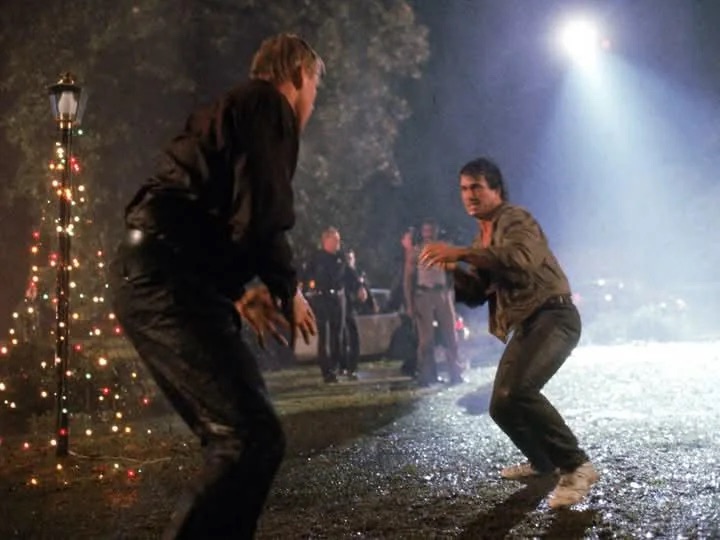
One of the quintessential ’80s cinema matchups. You can see this one coming from very early in the film and, when it arrives, it doesn’t disappoint. Choreographed by legendary jiu-jitsu and MMA pioneer Royce Gracie, the showdown between Mel Gibson’s Martin Riggs and Gary Busey’s Mr Joshua is a rain-soaked piece of brilliance. “Would you like a shot at the title?”
29. Bill and Ted vs The Grim Reaper – Bill and Ted’s Bogus Journey (1991)
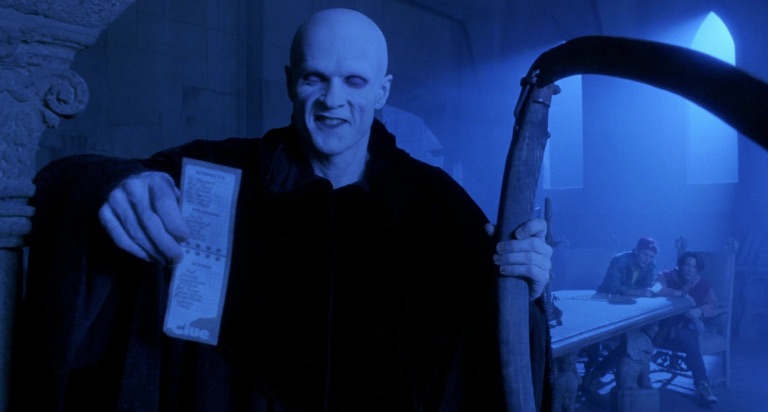
The battle between Bill and Ted and the Grim Reaper works as well as it does because William Sadler’s comic timing transforms Death from cosmic terror to flustered, thin‑skinned sore loser. It’s Sadler’s arrow straight delivery that makes this showdown iconic. He anchors the comedy by wanting to be dignified, even as he’s repeatedly beaten at children’s games. Every loss tightens his performance: clipped irritation, muttered protests, haughty attempts to regain gravitas. His commitment is so complete that the character becomes oddly sympathetic. “I said Plum!”
28. Martin Blank vs Felix La PuBelle – Gross Pointe Blank (1997)
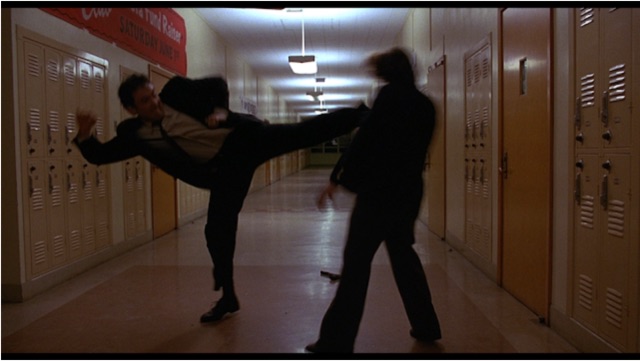
May seem a little out of place as the showdown is more about John Cusack’s Martin Blank (two Martins already!) coming face to face with the horror of his chosen profession. One hitman against another, this scene hits especially hard as it is not glamorised at all. Unlike the glamour of Lethal Weapon, this is quick, brutal and remorseless. Every punch lands with great realism and it is a real gem, especially as it is hidden inside a comedy. Cusack has a lot of martial arts training himself and Felix is played by his actual coach, Benny Urquidez. The English Beat soundtrack over the top is a great choice too.
27. Wong Fei Hung vs. Commander Lan – Once Upon a Time in China II (1992)
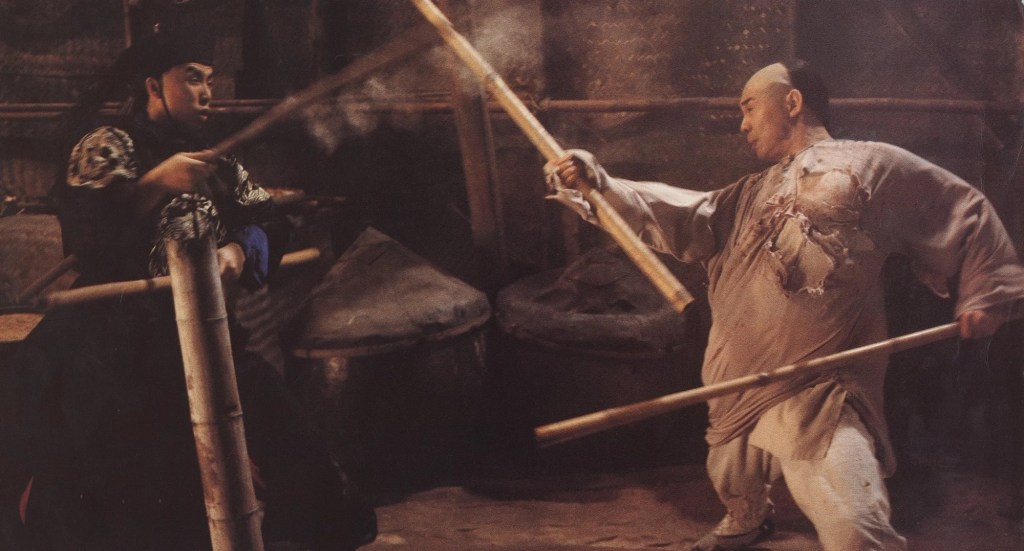
The climactic pole fight between Jet Li and Donnie Yen in Once Upon a Time in China II is widely regarded as one of the finest one‑on‑one duels in Hong Kong martial arts cinema. The pair have two major confrontations that are the film’s standout achievement, with extraordinary speed, precision, and physical commitment, with both fighters using long bamboo poles that become blinding extensions of their bodies. The production itself was demanding: the film’s action design was celebrated for pushing wirework and practical choreography to new heights, earning technical accolades and industry recognition. The resulting duel is a stunning display of rhythm, athletic intelligence, and escalating danger – a showcase of two legends in their prime.
26. Baxter vs Johnson – The Offence (1973)
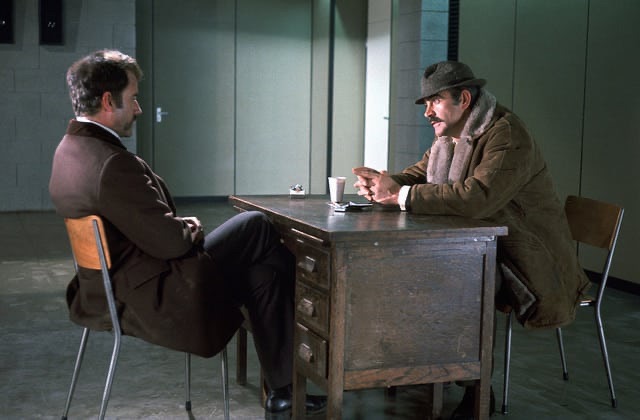
Sidney Lumet does fantastic work in enclosed spaces, and you don’t get more claustrophobic than an interrogation room. The key to the scene is the illusion of power and how easily one can be shoved over the edge when it slips. Ian Bannen’s suspected child killer pushes Sean Connery (in perhaps his best role) to the limit, forces him to question himself to the point where all his pent-up rage and accumulated trauma erupts into brutality. It’s a shocking, twisted scene with a visceral quality to it.
25. Lee vs O’Hara – Enter the Dragon (1973)
Not the final confrontation; not a fight that is in any way in doubt from minute one. You just know who is going to win this one. Bruce Lee barely has to break a sweat in seeing off the brute who caused his sister’s death. It’s the first time you get a proper look at Bruce Lee’s skills in Enter the Dragon and boy does he impress. Bob Wall’s O’Hara hasn’t got a chance. It doesn’t have to be always equals to make a showdown work. Sometimes it’s just an expression of righteous fury.
24. Brady vs Drumond – Inherit the Wind (1960)
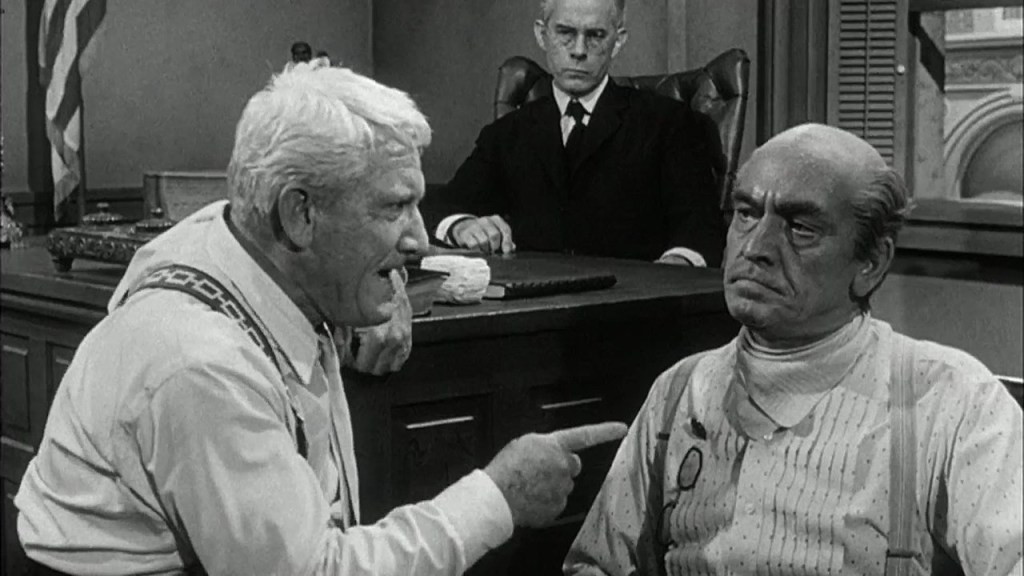
When Spencer Tracy’s Henry Drummond finally gets his adversary onto the witness stand, what ensues is a masterful display of oratory that beguiles the viewer and elevates this scene beyond drama. The interplay between Drummond and Brady (Fredric March) is wonderful and really shows off two people passionate in their belief in opposing views. One is led into an admission that completely undoes him in a glorious example of cinema at its finest. Tracy’s final summation was shot in one take, too. On a trivia note, this became the first ever in-flight movie when it was shown by TWA.
23. Robin Hood vs Guy of Guisbourne – The Adventures of Robin Hood (1938)
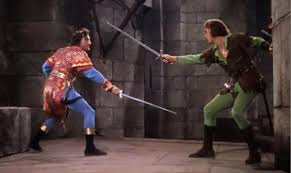
The epic showdown between Errol Flynn and Basil Rathbone took days to film and featured no stunt performers. They did it all themselves. Rathbone was a champion fencer in the British Army and there are a couple of times when he could easily have killed his opponent. Rathbone was 17 years older than Flynn and a heavy smoker, but he matches the younger man exceptionally well. There is a famous moment when Flynn knocks the sword clean out of Rathbone’s hand, but the editing is done so well that you can barely tell. I’ve loved this one since I was young and used it in a presentation I gave in English at school of my Top 10 movie scenes.
22. Indiana Jones versus German mechanic – Raiders of the Lost Ark (1981)
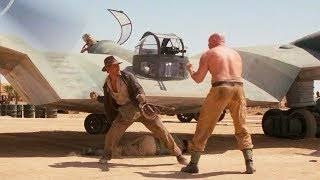
The fight beside the Flying Wing in Raiders of the Lost Ark works because it pits Indiana Jones, already battered and bruised, against a mountain of wrestler Pat Roach. The bald, grinning bruiser wants a fistfight and won’t let Indy leave until he gets one. What follows is a brutal, wordless struggle with Indy outmatched at every turn and surviving only on reflex and luck. The scene’s visceral power comes from how it was shot. The Flying Wing was designed by production designer Norman Reynolds and built full‑scale by Vickers, so Spielberg’s team had complete freedom to stage the brawl around it. The danger wasn’t just cinematic. During filming, the turning plane actually ran over Harrison Ford’s knee, tearing a ligament. The only thing that saved him was the Tunisian heat softening the rubber tyres. Ford refused hospital treatment, iced it, and kept shooting. Roach, meanwhile, sells the mechanic’s swagger through clean, wrestler‑style hits, making the character both terrifying and oddly sporting. (source imDb)
21. Bourne vs Desh – The Bourne Ultimatum (2007)
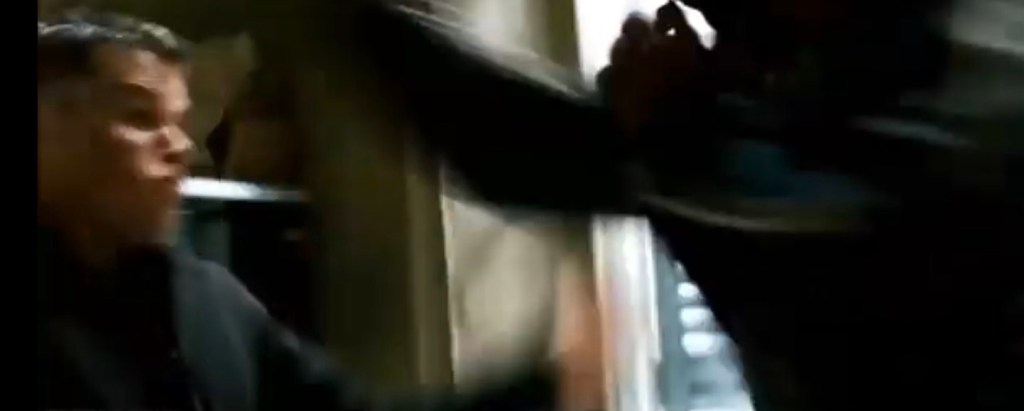
In a franchise known for gritty fight sequences, the apartment fight between Jason Bourne (Matt Damon) and Desh (Joey Ansah) is a masterclass. It’s brutal, desperate and high-stakes. As I write this, I’m thinking of a scene from one of Timothy Dalton’s Bond films, The Living Daylights, where the KGB hitman, Necros, takes on a British agent in a kitchen. Both are similar in their desperate quality and the use of anything that comes to hand as a weapon. It’s the narrative stakes at play that elevate a scene like this into my list. The Necros scene is brilliant – one of my favourite fight scenes in a film – but it doesn’t quite make it as a showdown as one of the characters is completely unknown to us as viewers. Bourne and Desh have earned this scene and it is executed brilliantly.
20. Feyd vs Muad-dib – Dune Part 2 (2024)
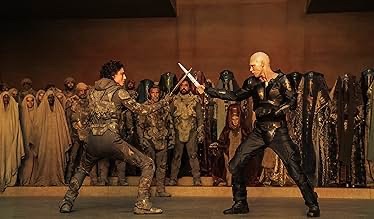
Austin Butler was my standout in the second part of Denis Villeneuve’s adaptation of my favourite book. He dripped menace in every scene. When it came to the final showdown between Paul and Feyd, it was a great encounter, building on Frank Herbert’s text and making something really memorable. I’ve always felt a sense of inevitability when reading the book. All you see of Feyd is him fighting against drugged slaves. The one time he fights someone decent (a beaten Atreides soldier), he struggles a little, which makes you feel the outcome of his duel with Paul is beyond doubt. Villeneuve’s direction and Butler’s malice make this a lot more treacherous and uncertain.
19. Aragorn vs Lurtz – Lord of the Rings: The Fellowship of the Ring (2001)
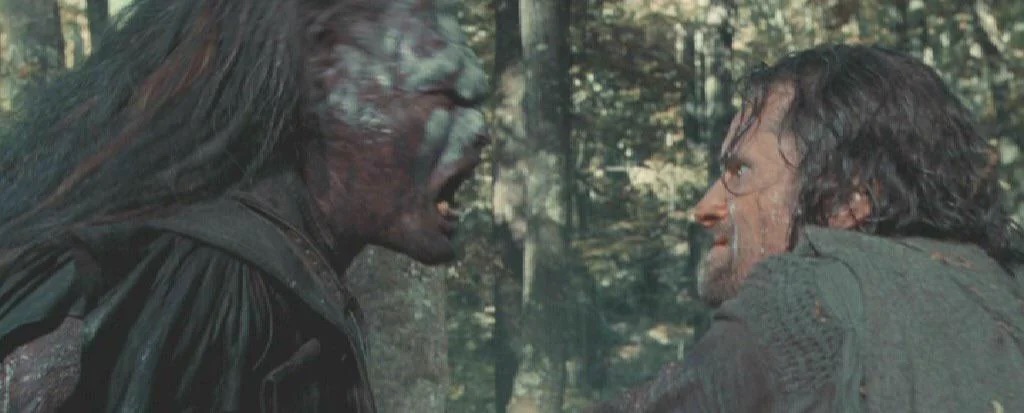
I’ve not often heard cheers in a cinema. That’s more of an American thing, I guess. However, I will never forget the Odeon in Leicester Square erupting when Aragorn cuts off this Uruk Hai’s head. It’s a brilliant fight between good and evil, distilled into just a few moments. Our hero is worn out already and looks outmatched against this monster, which makes the victory even greater. The most famous bit about this scene is the real (if unintended) knife throw that Lawrence Makaore made. Viggo Mortensen was able to instinctively deflect with his sword. After Lurtz is impaled with Aragorn’s sword, Makaore improvised the head pull on Aragorn and this was left in by Director Peter Jackson as it looked so good.
18. Dutch vs The Predator – Predator (1987)
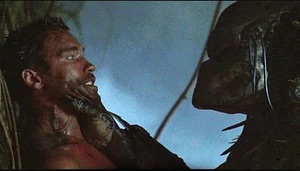
Another monster encounter next. This time it’s Arnold Schwarzenegger at the height of his powers against Kevin Peter Hall as the Predator. This duel is played so well, starting with Dutch, after having spent an afternoon doing a Kevin MacAllister, lighting a bonfire and making the manliest shout since Tarzan to attract the alien hunter. It’s a wonderful sequence. My favourite piece of trivia from this is that the thermal vision of the Predator would have been completely useless in the jungle, as the ambient temperature would have matched the body heat of the humans. Regardless of that, the fight between them is phenomenal, really making you wonder how Schwarzenegger is going to survive.
17. Juror no. 8 vs Juror no. 3 – 12 Angry Men (1957)
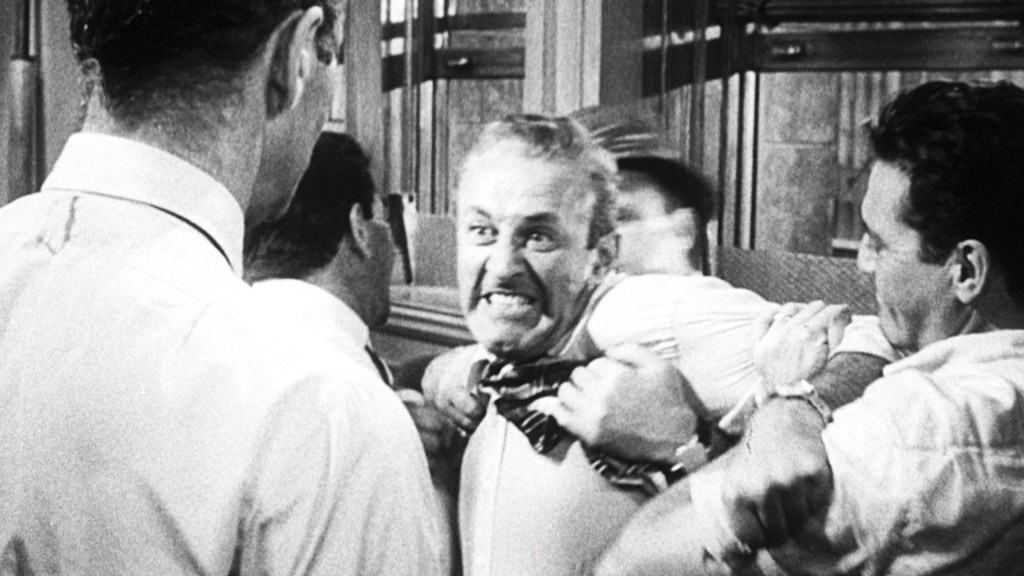
This could just as easily be Juror no.8 versus everyone else and it would still work. The whole film is one long showdown that never lets up. However, the moment that I’ve picked from Sidney Lumet’s masterpiece is the scene where Henry Fonda, as Juror no.8, baits Lee J Cobb into threatening to kill him; a threat that, of course, he has no real intention of carrying out. He lures him into the trap with such expertise, layering on more and more stinging comments about no. 3’s desire to ‘pull the switch’ on the defendant. Cobb explodes, shouting out, “I’ll kill him, I’ll kill him.” The look on Cobb’s face, and the others around him when Fonda delivers the masterstroke is nothing short of breathtaking. “You don’t really mean you’ll kill me, do you?” Nailed him.
16. Balboa vs Creed – Rocky (1976)
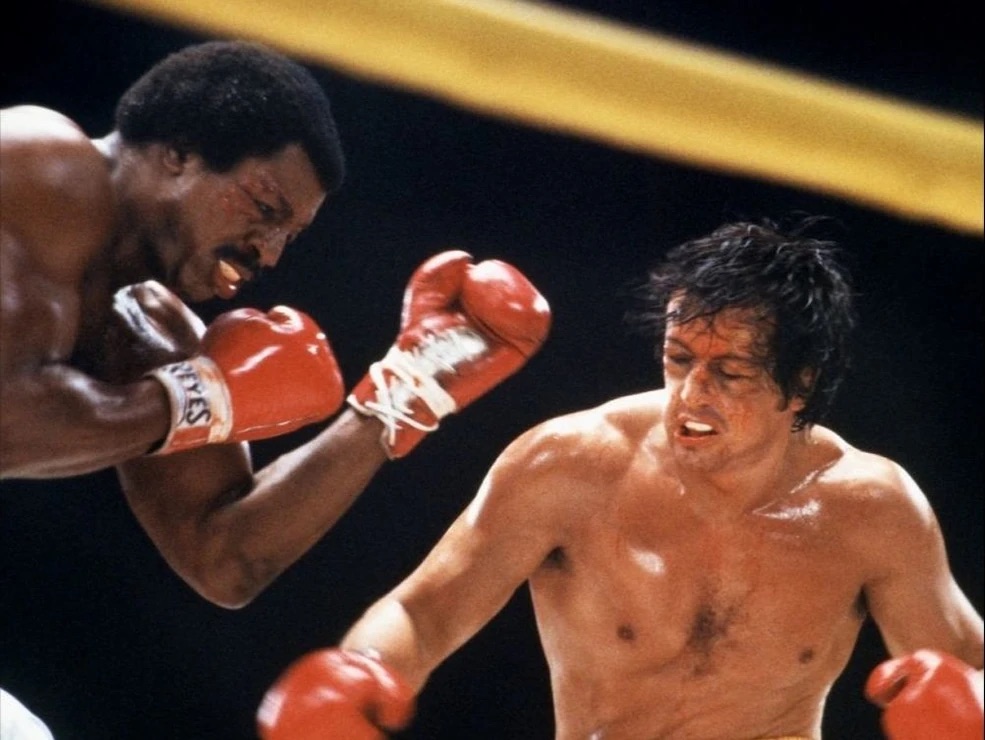
Sylvester Stallone’s script, and his bullish commitment to making this film his way, ensured that the final result was as close to his vision as possible. Carl Weathers is the perfect casting in the role of Apollo Creed, and when the two come together in the finale, it’s a fantastic piece of drama that has lasted the test of time. It’s not about who wins; it’s about what winning really means. It’s about stubbornness and refusing to fail. It’s raw, emotionally honest – a fight where survival is the achievement. 4000 eager people turned up to form the crowd for the fight, on the promise of free chicken!
15. Tuco vs Blondie vs Angel Eyes – The Good, The Bad and the Ugly (1966)
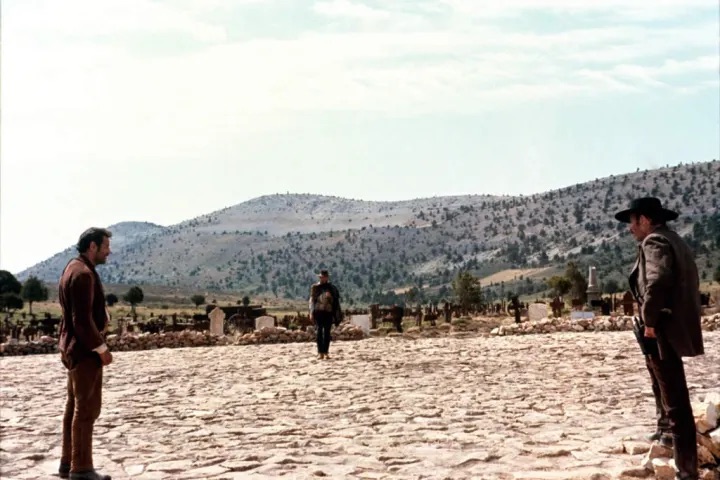
The final standoff between Blondie, Tuco, and Angel Eyes is cinema’s most exquisite exercise in sustained tension because Sergio Leone turns stillness itself into choreography. Three men stand in the vast, hand‑built circular arena of Sad Hill Cemetery, each calculating who will shoot first. As Ennio Morricone’s “Il Triello” escalates, the editing accelerates in perfect synchrony, cutting closer and closer until only eyes fill the screen. Leone stretches time like a noose, then snaps it with gunfire: Blondie kills Angel Eyes cleanly, Tuco discovers his gun is empty, and the unbearable tension resolves in a single breath.
14. Fletcher vs Neiman – Whiplash (2014)
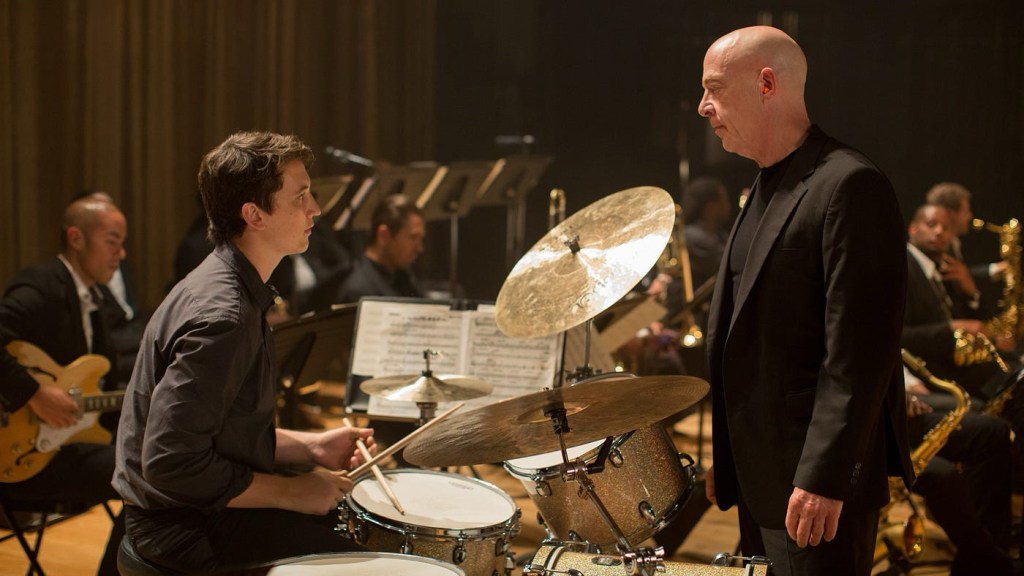
The finale of Whiplash appears at first glance to be triumphant—a dazzling, cathartic drum solo in which Andrew (Miles Teller) finally meets Fletcher’s impossible standards. The tempo builds and we marvel at Andrew’s success, beating Fletcher’s plan to humiliate him; it feels like a victory. Yet beneath the surface, this scene is profoundly disturbing. Andrew’s performance is not an act of liberation but of total submission. Every beat of the drum signals how thoroughly he has surrendered himself to Fletcher’s cruel vision of perfection. The physical strain and manic obsession make clear that this is not the triumph of an artist, but the complete erasure of a person. Fletcher smiles, not out of pride, but because he’s broken Andrew into exactly what he wanted – a tool for his own ego. The finale’s brilliance lies in this contradiction: dazzling success and utter self-destruction, indistinguishably fused in one relentless, horrifying performance.
13. Hunter vs Ramsey – Crimson Tide (1995)
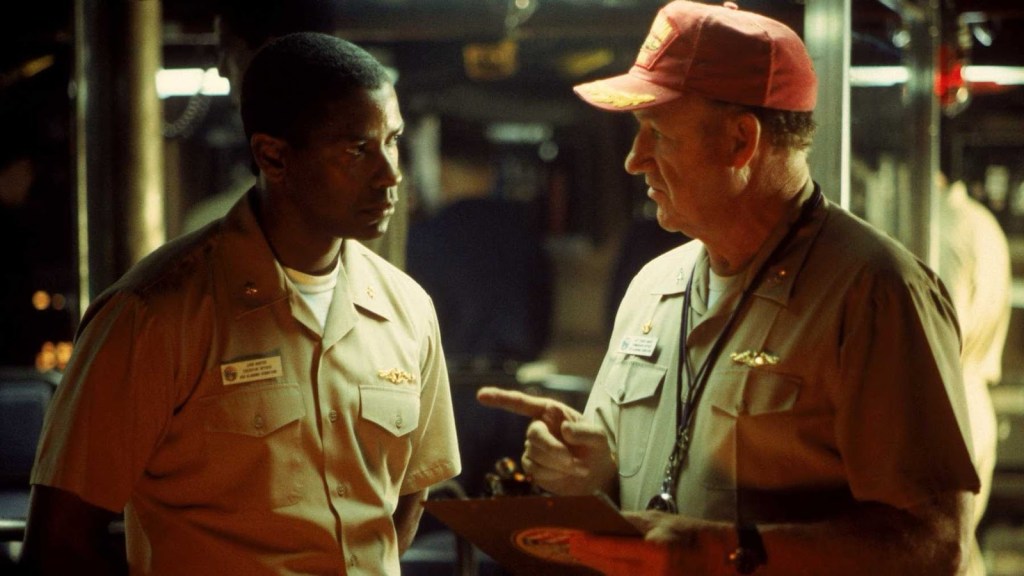
The confrontation between Captain Frank Ramsey and XO Ron Hunter comes like an inevitable, controlled detonation. Their argument tightens into a philosophical chokehold: duty versus doubt, protocol versus principle. The script and performance are perfectly aligned with Denzel Washington’s own motivation for taking the role – he wanted to “joust with a master,” in Hackman, and you can feel that energy pulsing in the scene as the two men escalate. They are both masters who bring their characters to life with the tension around them and between them – nothing melodramatic – all steely resolve and principle against the weight of command and a life of duty. The stakes could not be higher: nuclear war if they launch mistakenly, but global catastrophe if they fail to launch when ordered. This is the tension Jerry Bruckheimer and director Tony Scott designed the film around—the pressure cooker of a submarine command structure under unrelenting tactical ambiguity. It is one of the rare moments in a Hollywood film where the protocol for relieving a commanding officer is depicted with near‑textbook accuracy, a detail grounded in the insight provided by a retired XO who consulted for the production. (source ClassicFilmGuide.com).
12. Inigo Montoya vs. Count Rugen – The Princess Bride (1987)
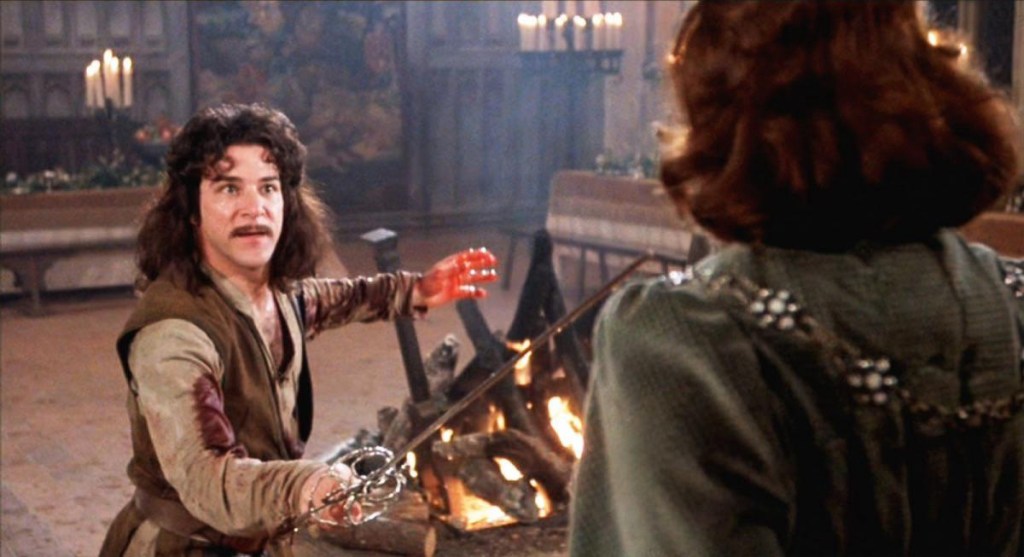
Inigo Montoya’s duel with Count Rugen is one of cinema’s most satisfying showdowns because it pays off so much. We’ve grown to love Inigo because he is written so brilliantly and brought to life so well by Mandy Patinkin. His lifetime of grief, training, and single‑minded purpose climaxes the moment he finally corners Rugen. Here, the film, which is a witty fantasy adventure, suddenly shifts seamlessly into something raw and human. Each repetition of his iconic vow gains weight as Patinkin infuses it with exhaustion, fury, and a trembling resolve that feels utterly earned. What makes the confrontation transcendent is that it isn’t just revenge – it’s catharsis. And when he delivers that awesome final line – “I want my father back, you son of a bitch.” – the emotional force hits like a hammer. His performance strips away any fairy‑tale distance, grounding the moment in real grief and making victory feel both righteous and deeply, deeply human.
11. André Moreau vs Noel, Marquis de Mayne – Scaramouche (1952)
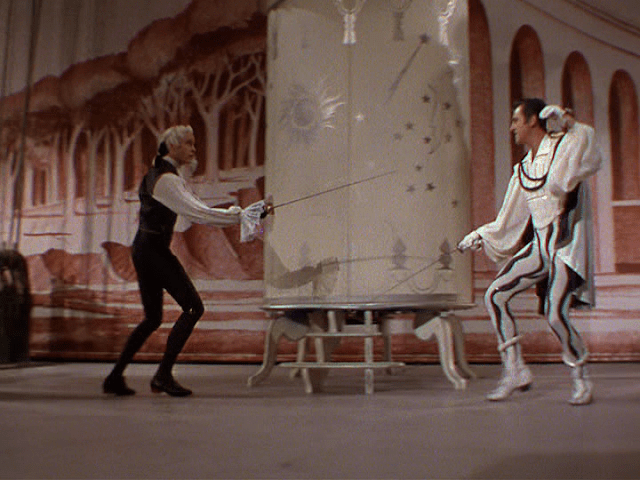
The final duel in Scaramouche is not just extraordinary because of its length but by how the narrative brings us to it. This climactic confrontation is reported to be the longest fencing duel ever captured on film, lasting just over six minutes from first sword contact to last. André Moreau’s entire journey, his grief and gruelling self‑reinvention, the honing of his skills, builds to this with a sense of inevitability. Stewart Granger and Mel Ferrer trained for eight full weeks solely for the sequence, memorising an astonishing 87 individual sword passes and 28 stunts (courtesy IMdB), a level of preparation that echoes the intensity and discipline depicted within the story itself. The duel’s length becomes part of the storytelling: a physical embodiment of years of resentment and preparation boiling to the surface. As the combatants sweep through balconies, staircases, and finally onto the stage of the Théâtre Feydau, the theatre itself becomes a kind of operatic battleground. Granger’s training under European champion Jean Heremans, and the injuries he endured during filming, including a wrenched knee and damaged shoulder, add a grounded, physical authenticity to the on‑screen struggle, heightening the sense that Moreau is fighting with every fibre of his being. More people need to see this film.
10. Fast Eddie vs Minnesota Fats – The Hustler (1961)
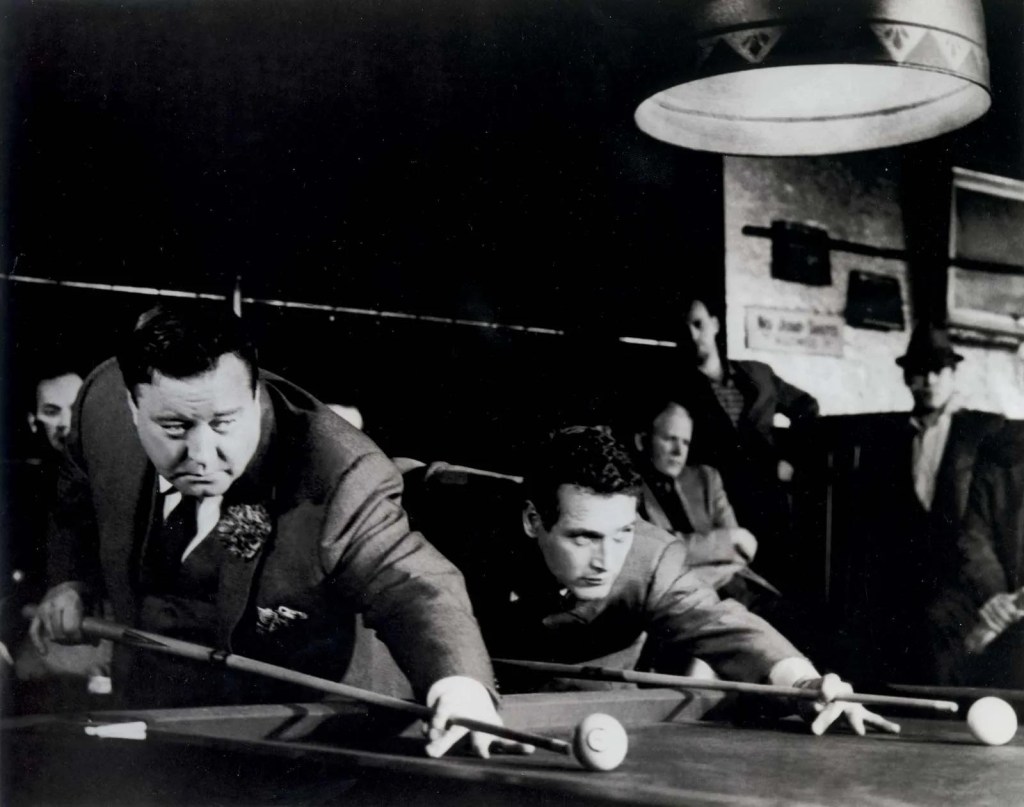
The final match between Fast Eddie Felson and Minnesota Fats in The Hustler unfolds in a quiet, deliberate way, stripped of the showmanship that fuelled their first encounter. By this stage, Eddie isn’t trying to dazzle anyone. He’s clawed his way through loss and self‑betrayal, through George C Scott’s Bert Gordon clawing away at his soul, and what’s left of him is leaner, sharper and, crucially, so much calmer than before. Now, he’s got character. Fats, the master of poise Eddie once admired for his almost musical grace at the table, meets him again with that same stillness, but this time Eddie cannot miss. The match becomes an unspoken dialogue between two men who understand exactly what it’s for: not money, not reputation, just because they are the best. Eddie’s control deepens with each shot, a steadiness forged through pain and clarity. Fats recognises it too – the moment when the balance shifts, when Eddie’s discipline finally matches his natural talent. Their confrontation feels devoid of ego, almost ritualistic. Layered beneath the psychology is the authenticity of the performance. Jackie Gleason, a genuinely skilled player, made his own shots, while Paul Newman immersed himself in intensive training, even installing a table at home to practice relentlessly. “Fat man? You shoot a great game of pool.” “So do you, Eddie.” Magic
9. Hector vs Achilles – Troy (2004)
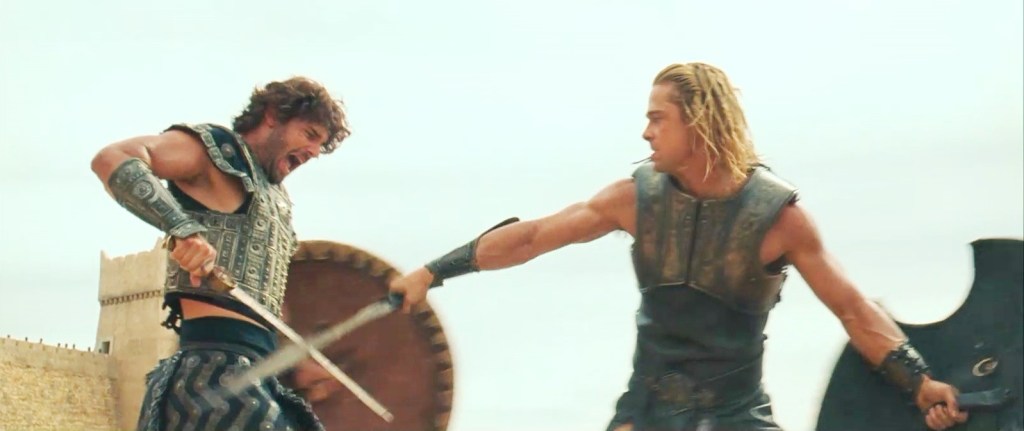
The duel between Hector and Achilles in Troy is shaped as both a personal clash and a spectacle. Achilles arrives with the cold, honed intensity that Brad Pitt cultivated throughout production, and Hector meets him with Eric Bana’s grounded humanity, which gives the scene its emotional centre. The fight feels stripped of ornament, because Director Wolfgang Petersen insisted on authenticity in every movement, requiring the actors to perform their own stunts, a decision that pushed them to the limits of safety and endurance (source: 3dvf.com). This commitment became literal when Pitt accidentally struck Bana during filming, causing him to lose consciousness for nearly twenty minutes, an incident that left a real imprint on the actors’ performances and on the tension visible in the final cut. Bana and Pitt endured harsh physical conditions, including heat and fatigue, because Petersen wanted their exhaustion to feel genuine on screen, and this dedication infuses the duel with a raw, bruised intensity. The result is a confrontation that feels operatic yet painfully human. In a film that is often overlooked in the rush of sword and sandal revivals that appeared in the wake of Gladiator, there are many things to love, none more so than this tragic duel between two people who should not be fighting each other.
8. Neo vs Agent Smith – The Matrix (1999)
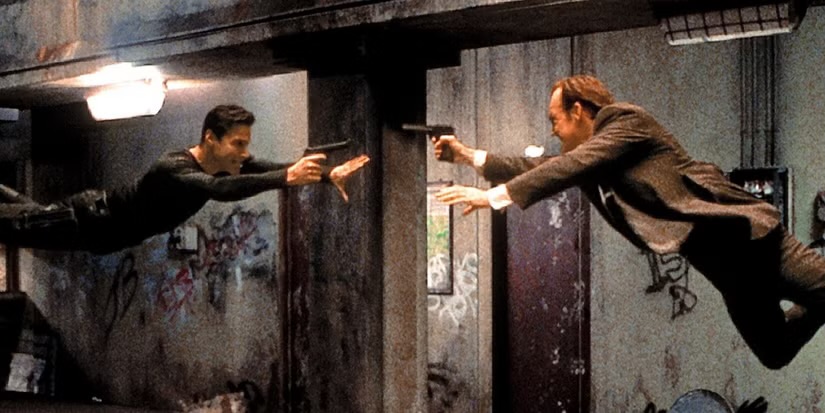
The subway fight between Neo and Agent Smith in The Matrix works so well because it feels like the moment Neo finally stops running. The scene gains a charge because it marks the first time Neo chooses to stand his ground with real intent. In the stillness of the station, the two face each other like opposing forces that have been building all film, and their clash feels both personal and epic. The Wachowskis shaped the confrontation with clean, purposeful framing, because they wanted the focus to be on the characters rather than on flashy camera tricks. The scene cuts back and forth between the two fighters in a way that highlights personality within the action. A big part of why it works is that Keanu Reeves and Hugo Weaving performed much of their own choreography, which lets the camera linger a little longer and gives each exchange a tangible weight. The influence of Hong Kong action cinema adds a graceful sharpness, because the wire‑assisted jumps and close‑quarters strikes carry a sense of heightened reality without ever feeling artificial. (source: Wikipedia) What lingers, though, is the way you can feel Neo growing into himself with each blow, his movements gaining confidence. Smith, steady and implacable, comes across like the machine world’s answer to that awakening; bluntly, coldly determined to shut it down. By the time Neo rises from the train tracks, the fight has become something more than a test of strength. I remember seeing this in the cinema back when it was released. Pure brilliance.
7. McKay vs Leech – The Big Country (1958)
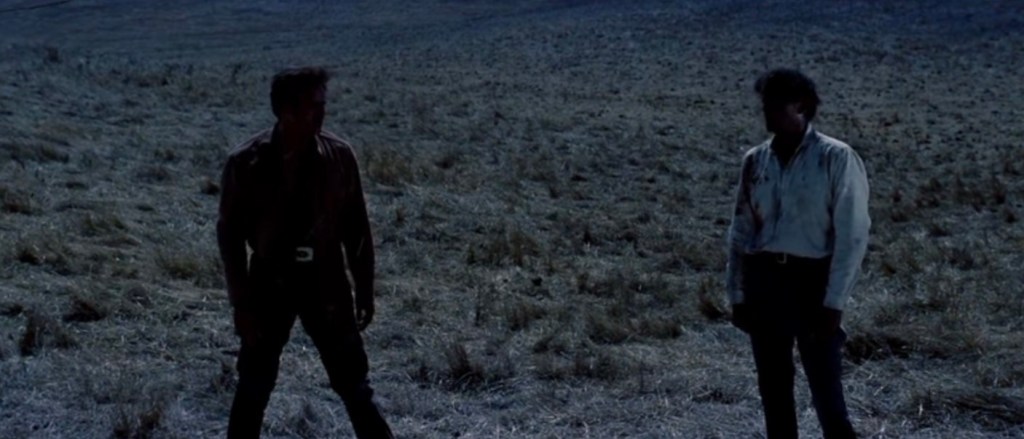
The fistfight between Gregory Peck’s James McKay and Charlton Heston’s Steve Leech in The Big Country stands out because it feels like the moment the film finally lets its simmering tensions boil over. McKay, the quiet outsider who refuses to measure himself by frontier bravado, has spent the story absorbing ridicule and suspicion, and Leech just can’t stand the suggestion that this calm, self‑possessed man could ever be his equal. The sequence carries unusual weight for a 1950s Western, because the film spends so long building toward it, letting small grievances, pride, and unspoken jealousy accumulate until neither man can back down any longer. That slow build-up is why the fight works so well. Even when they finally fight, the scene refuses to rush. Heston and Peck trade blows for nearly five minutes, a length that was striking for the era, with no soundtrack except the grunts and scuffs of the two combatants. They are shot in different ways, but most strikingly in a long shot that shows the darkened brush beyond them and makes them (and their differences) seem very small in the grand scheme of things. Both characters are written as capable, principled men shaped by very different worlds, Hector and Achilles of the West. Their clash feels even more iconic given the combined star power on screen, since the film pairs two of Hollywood’s most commanding presences at the height of their careers. The result is a showdown that feels surprisingly thoughtful, even as it ends up in an exhausted heap on the dusty floor. “All I can say, McKay, is you take a hell of a long time to say goodbye!”
6. Henry Gondorff vs Doyle Lonnegan – The Sting (1973)
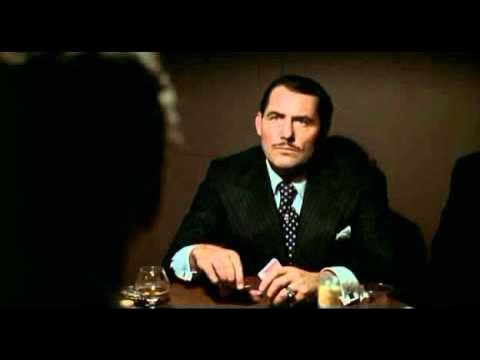
No guns, fists or swords in this one, but wits can be just as deadly. The poker game on the train in The Sting is one of cinema’s great battles of intelligence and ego, because it is fought entirely through posture, timing, and nerve. Henry Gondorff arrives not as the legendary con man he is, but as a bleary, stumbling drunk who can barely sit upright, soaked in gin to perfect the illusion. Across the table sits Doyle Lonnegan, a man whose pride is both his armour and his fatal flaw, and the train car becomes a kind of pressure cooker. What makes the scene extraordinary is the way Gondorff weaponises his behaviour. He mispronounces Lonnegan’s name, pushes his manners past the point of insult, and lets the offence sink into Lonnegan’s bones. Lonnegan, a man used to being in control, cannot tolerate this shuffling buffoon, and that irritation becomes the hook. He storms out to have the deck rigged and returns certain of victory, holding a hand designed to crush Gondorff completely. Instead, he is out‑cheated at his own crooked game, because Gondorff switches his hand, revealing four jacks where he previously held only threes. Lonnegan’s silence in that moment is the real defeat, because calling the con would expose his own cheating, and the humiliation tastes far worse than the financial loss. It’s a masterclass in psychological warfare, because the cards are never the point. The point is watching two predators circle each other, and seeing one of them realise that they have been completely outclassed. Newman and Shaw play this scene brilliantly, both embodying their roles and making us feel the tension boil in that tiny room.
5. Bond vs Grant – From Russia With Love (1963)
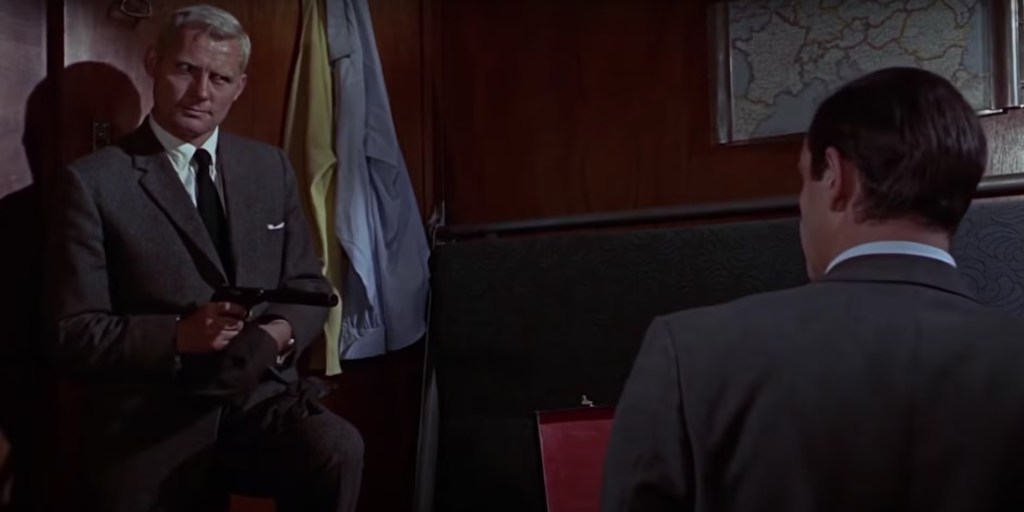
Another train car; another character played by Robert Shaw. But where Gondorff and Lonnegan play their duel with smiles, bluffs, and barbed politeness, the confrontation between James Bond and Red Grant in From Russia with Love feels like a sudden plunge into violence. The two men sit across from each other in the tight compartment of the Orient Express, and the tension doesn’t feel like a game. There is no slow dance of ego here, because Grant is not a man to be provoked into error; he has studied Bond, shadowed him, and positioned himself as the perfect predator. Having said that, it is another fatal flaw, this time greed, that finally gives Bond his opening. The shift from conversation to violence is abrupt, because the film treats the moment as the snapping of a wire. What follows is a fight legendary for its brutality, a desperate struggle in a space barely wide enough for two men to stand. The cramped setting forces their bodies into close quarters, and the resulting brawl is raw and frantic, a world away from quips and elegance. It is this contrast, the suffocating immediacy of fists, garrottes, and sheer survival instinct, that sets the scene apart from a lot of what people associate with the Bond canon, at least pre Daniel Craig. Both actors threw themselves into the preparation for the scene, training with professional wrestlers in Istanbul and leaving real bruises on each other during the encounter.
4. Judah Ben Hur vs Messala – Ben Hur (1959)
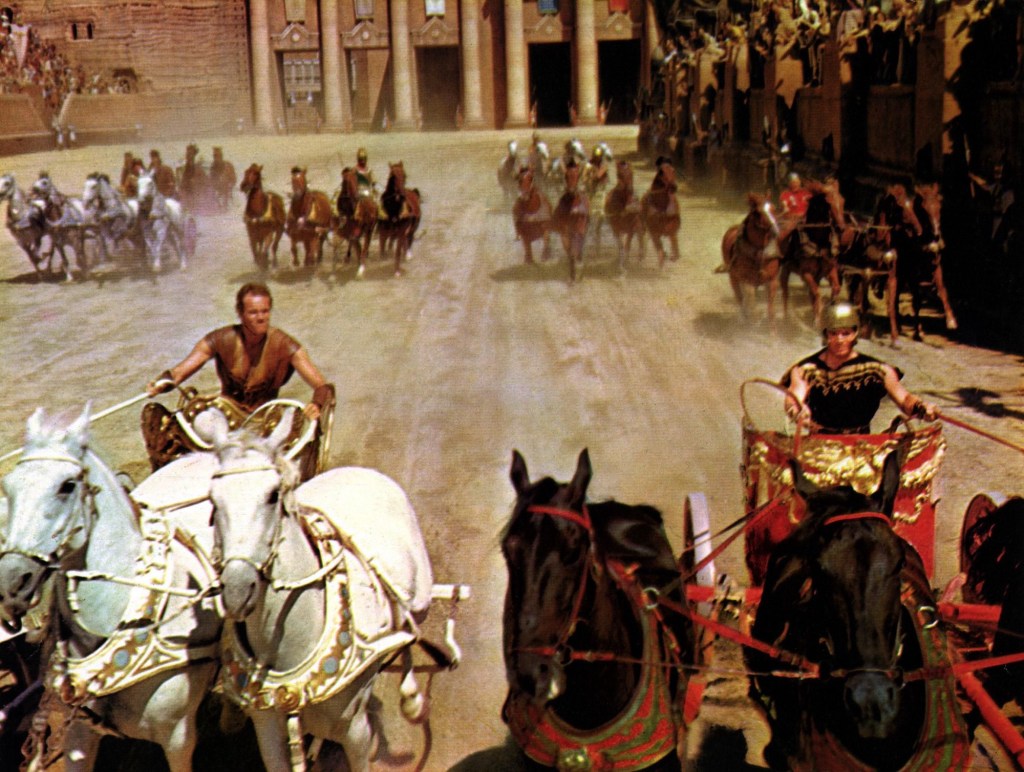
A second appearance for Charlton Heston. The chariot race in Ben‑Hur is a collision of personal hatred and grand spectacle, because Judah Ben‑Hur and Messala bring years of bitterness onto the track with them. Stephen Boyd’s Messala, riding a chariot fitted with blades modelled after ancient scythed war chariots, enters the arena with the clear intention of maiming his opponents, not simply beating them. Judah uses no such tricks as he faces off against the man who betrayed his family and sent him off to die in the galleys. The scene’s iconic power comes from the way the camera captures real physical danger. Director William Wyler’s team built the arena on an enormous 18‑acre set at Cinecittà Studios, populated with 15,000 extras, making the place feel like a living Colosseum. Heston trained in chariot driving himself, which is why his control of the horses looks so natural. (source: imdb). The most famous moment, Judah nearly being thrown from his vehicle, was not scripted. Stuntman Joe Canutt was launched into the air in a real accident and fortunately only suffered a cut chin. Wyler kept the footage and later inserted close‑ups of Heston pulling himself back inside the chariot. (source: Screenrant) The result is a sequence where stunt craft, storytelling, and genuine peril merge into one of cinema’s most enduring confrontations.
3. Anakin vs Obi Wan – Star Wars Episode III: Revenge of the Sith (2005)
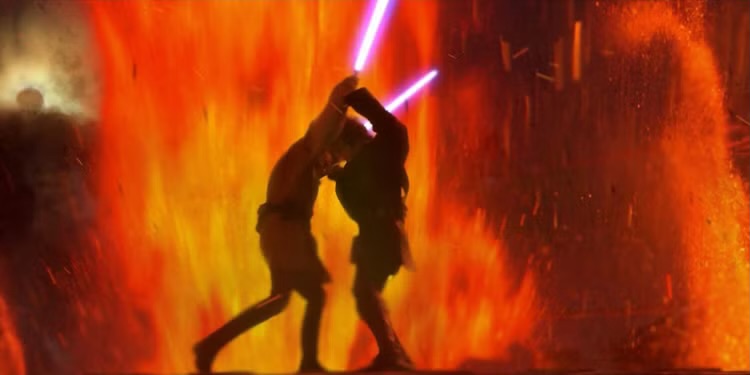
Three films build toward this moment. We know it’s coming from the beginning, which makes it all the more devastating when it finally arrives. The duel on Mustafar in Revenge of the Sith is the emotional breaking point of the prequel trilogy, because it signifies the collapse of a brotherhood. Anakin Skywalker, consumed by rage and wounded pride, meets Obi‑Wan Kenobi amid a landscape of fire. Their fight sweeps across collapsing platforms, narrow catwalks, and drifting machinery. It is both balletic and brutal, What makes the showdown so gripping is that the environment becomes an adversary too. Lava bursts around them, machinery melts, and the entire facility roars with danger. Filming this spectacle required a hybrid approach: the actors performed on partial physical sets, moving through carefully choreographed sequences under stunt coordinator Nick Gillard, while blue‑screen and CGI extended the collapsing industrial hellscape. Ewan McGregor and Hayden Christensen spent extensive time rehearsing the choreography on set, and their commitment allows the duel to maintain flow, clarity, and emotional intensity. Anakin’s burning body on the bank at the conclusion is depicted with unflinching brutality, marking the destruction of the man he was and the birth of Darth Vader. Obi Wan walks away in tears, because this victory costs him his brother, his student, and any hope of saving the man Anakin once was. “You were my brother, Anakin!” A great duel, probably the best lightsaber battle there is, and a great sense of gravitas. What dampens it a little is the decision to intercut it with the far inferior meeting between Yoda and the Emperor. Beyond that, it’s just sensational.
2. Ripley vs The Alien Queen – Aliens (1986)
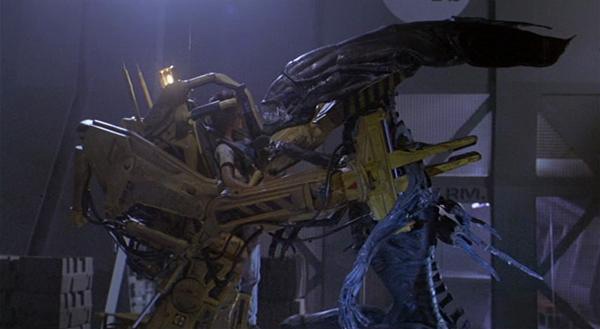
The final confrontation between Ripley and the Alien Queen in Aliens is unforgettable because it fuses primal emotion with ingenious practical effects, turning a sci‑fi action climax into a showdown between two fiercely protective mothers. Ripley, having fought her way through the xenomorph hive to save Newt, refuses to flee when the Queen boards the Sulaco. Instead, she steps back into the fray encased in the Power Loader, a towering exosuit that transforms her into the Queen’s equal in size and ferocity. The moment crackles with defiance, not just because of Ripley’s fury, but because of the gritty physicality that grounds the battle. Behind the scenes, the Power Loader itself was a testament to 1980s practical ingenuity. Operated through a combination of on‑set puppetry, hydraulics, and hidden stunt performers, it allowed Sigourney Weaver to convincingly inhabit its weight and movement, selling every stomp and swing. The Queen was an equally complex creation, brought to life through a colossal animatronic rig, puppeteers, and practical effects, which is why her movements feel massive, and unsettlingly real. The confrontation’s impact comes from that authenticity. When Ripley finally drags the Queen toward the airlock, she wins through grit, and the willingness to risk everything. It’s the perfect culmination of her arc—from survivor to protector to warrior – iconic.
1. Kaffee vs Jessep – A Few Good Men (1992)
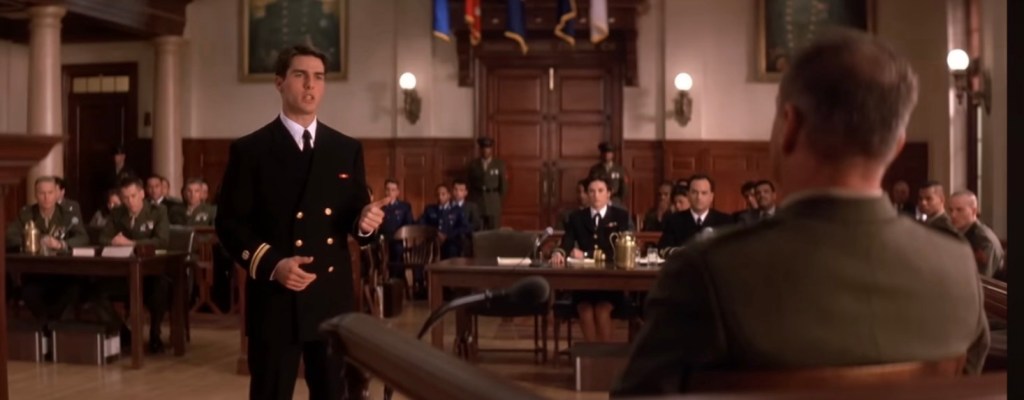
My winner is this – the final courtroom confrontation between Lt. Daniel Kaffee and Colonel Nathan Jessep. It’s one of cinema’s most famous verbal showdowns because it builds like a pressure cooker. Kaffee, previously dismissed as a lightweight who pleads out every case, finally commits to pushing Jessup into a corner from which he cannot escape. He strips away every buffer of rank and closes in until Jessep’s own arrogance becomes the trap. The exchange is a pure distillation of the film’s themes: the conflict between obedience and conscience, the seductive righteousness of authority. Nicholson’s volcanic delivery isn’t just memorable—it has become part of cinematic history. In the original play, Kaffee gets a break via a doctored logbook, but director Rob Reiner insisted the film version had to hinge entirely on Kaffee’s courtroom skill, making Jessup’s meltdown the true turning point (source IMDB). The scene’s charge comes from the way Cruise’s steady pressure triggers Nicholson’s legendary explosion; that famous outburst lands because Kaffee has stripped every rhetorical exit from the room. It’s a masterclass in escalation: you can witness Jessep getting more and more uncomfortable and annoyed. Nicholson filmed all his scenes in ten days, which is a testament to the precision and brilliance of his work. I love this scene, and it’s my greatest showdown ever in film.
Thanks for reading through all this. Let me know in the comments if you disagree with the order, or if I’ve missed your favourite. No room for Kill Bill or Highlander, nothing from Jackie Chan. Too much Charlton Heston. I get it. Let me know. I already know I’ve missed some classics. Maybe I should have done a Top 50. Brody vs. the shark in Jaws! Aagh.
Cheers
Richard
And don’t forget to buy my book!
 The Ardenna Crossing